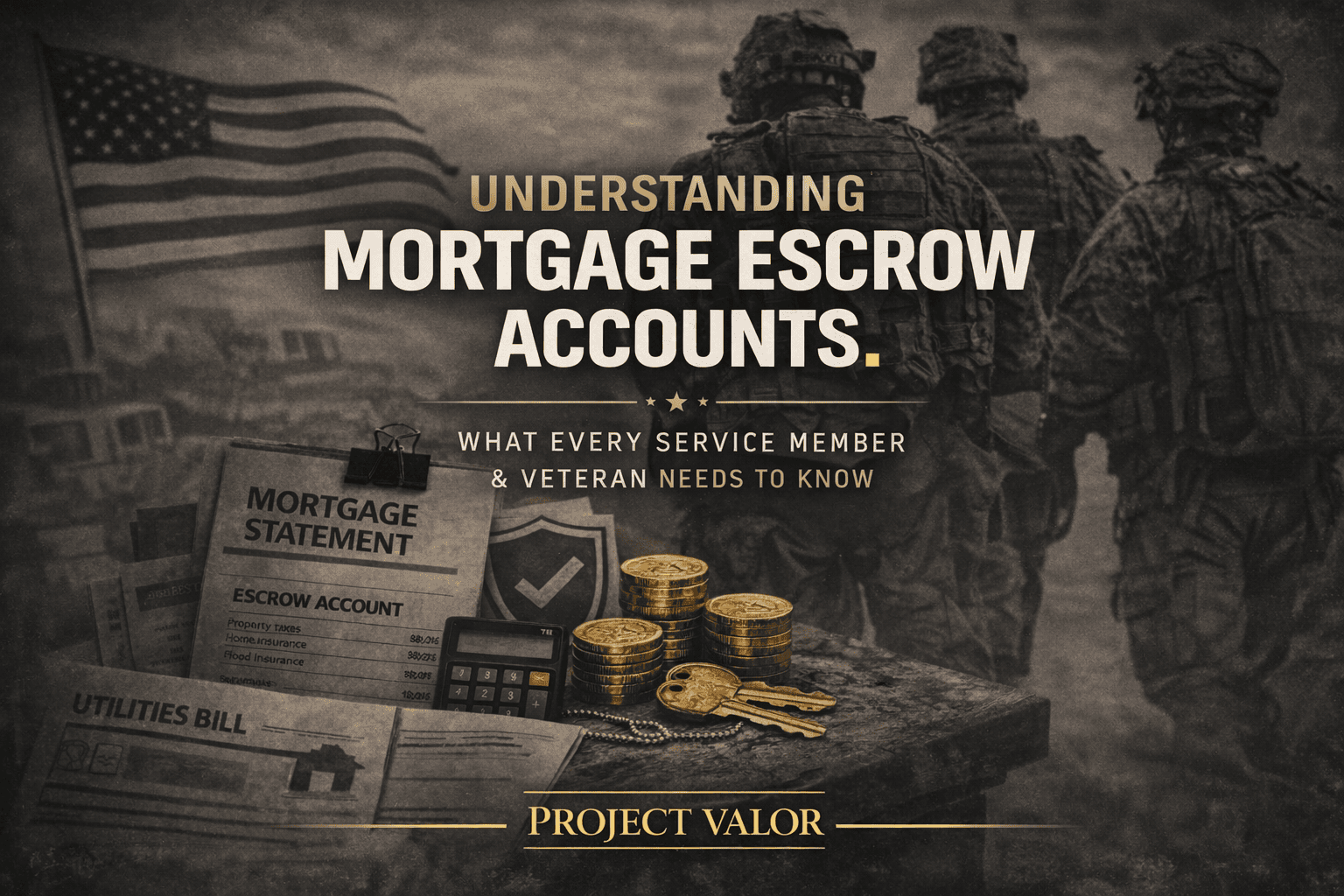
Understanding Escrow Accounts: What Every Homebuyer Should Know
Buying a home comes with a lot of moving parts, from mortgage payments to insurance and property taxes. For many homeowners, keeping track of these expenses can feel overwhelming. That is where escrow accounts come in. Whether you are using a VA loan or a conventional mortgage, understanding how escrow works can help you manage your homeownership costs more efficiently.
In this post, we will break down what an escrow account is, how it works, and why it matters, especially for VA loan borrowers.
What Is an Escrow Account?
An escrow account is a separate account set up by your mortgage lender to handle specific home-related expenses like property taxes and homeowners insurance. Instead of paying these large bills all at once, you pay a portion of them monthly along with your mortgage payment. Your lender then uses the funds in the escrow account to pay those bills on your behalf when they are due.
Think of it as a built-in budgeting tool. Instead of worrying about coming up with thousands of dollars for a property tax bill or an insurance premium, you are setting aside small amounts over time.
How Does an Escrow Account Work?
Here is how escrow fits into your monthly mortgage payment:
1. Your Mortgage Payment Is Divided Into Two Parts:
- Principal and Interest: This portion pays down your loan balance and covers the interest.
- Escrow Payments: This covers your property taxes, homeowners insurance, and, if applicable, other fees like flood insurance or HOA dues.
2. Your Lender Manages the Escrow:
- Each month, the escrow portion of your payment is deposited into your escrow account.
- When your tax and insurance bills are due, your lender uses the escrow funds to pay them directly.
3. Annual Escrow Analysis:
- Lenders review your escrow account annually to ensure enough funds are being collected.
- If property taxes or insurance premiums increase, your monthly escrow payment may go up.
- If there is an overage or shortage, you will either get a refund or be asked to cover the difference.
Why Escrow Accounts Matter for VA Loans
If you are using a VA loan, escrow accounts are typically required. Here is why they are beneficial:
- Consistent Budgeting: Escrow prevents surprises by spreading out large expenses over the year.
- On-Time Payments: Your lender ensures taxes and insurance are paid on time, helping you avoid late fees or lapses in coverage.
- Simplified Homeownership: With one combined mortgage payment covering multiple bills, managing your finances becomes easier.
Can You Opt Out of Escrow?
For most VA loans, escrow accounts are required, but some lenders allow Veterans to waive escrow accounts under certain conditions. This option can reduce your closing costs or cash to close because you will not need to pre-fund the escrow account at closing. However, waiving escrow means that you, as the homeowner, are now fully responsible for saving and paying your property taxes and homeowners insurance when they come due.
While this option can free up more cash at closing and give you more control over your payments, it also requires strong budgeting discipline. Missing a tax or insurance payment could result in penalties or lapses in coverage.
Key Points to Consider Before Waiving Escrow:
- Cash Flow Flexibility: You will not need to front large sums at closing.
- Increased Responsibility: You must manage and pay large bills on time.
- Potential Risks: Late payments could result in fees or insurance cancellations.
Tips for Managing Your Escrow Account
- Review Your Annual Escrow Statement: Pay attention to changes in your property taxes or insurance rates that could affect your payment.
- Plan for Escrow Adjustments: If you know your property taxes are going up, expect an increase in your monthly payment after the next escrow analysis.
- If You Waive Escrow, Stay Disciplined: Set up a dedicated savings account for taxes and insurance to ensure you have the funds when those bills come due.
- Contact Your Lender with Questions: Whether you have an escrow account or not, reach out to your lender if something seems off or unclear.
The Bottom Line
Escrow accounts may seem complex at first, but they are designed to simplify the homeownership process. For VA loan borrowers, they offer peace of mind, ensuring your biggest bills, like property taxes and insurance, are handled automatically.
However, for Veterans who prefer more control over their finances, some lenders offer the option to waive escrow accounts. While this can lower your closing costs and give you flexibility, it also comes with added responsibility.
Still have questions about how escrow works with your VA loan? Or wondering if waiving escrow is right for you?
Let’s connect!
📲 Follow me on Instagram: @the_matthew_clanton and @projectvalorva
💬 DM me anytime with your questions or for personalized guidance.